
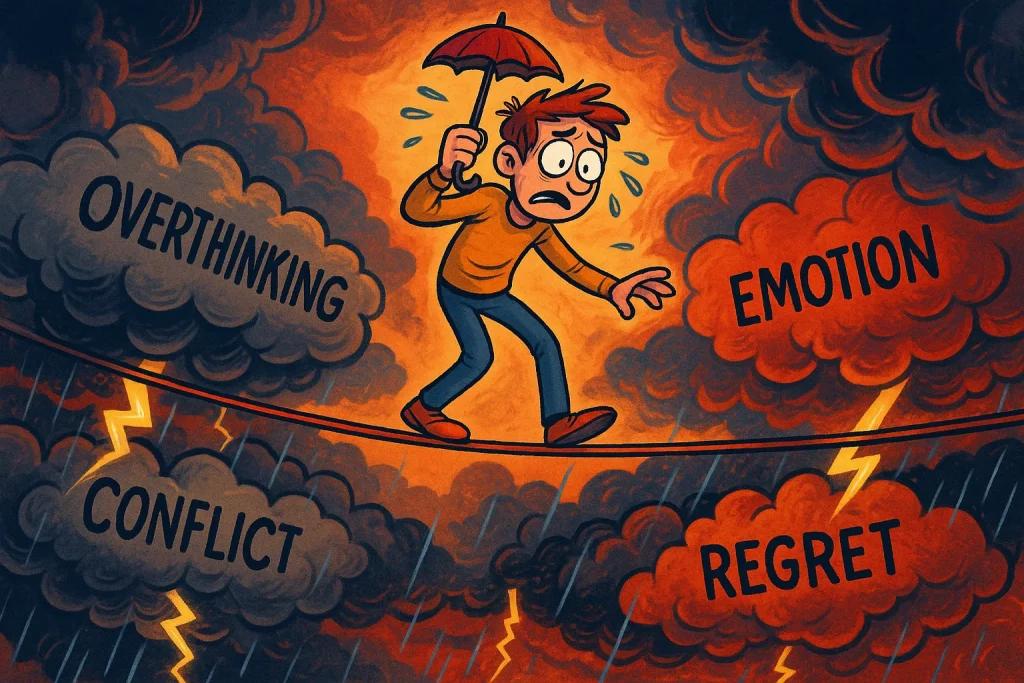
ADHD and Avoiding Conflict
We are conflict-dodging masters... until we’re not
Let’s be honest—if avoiding conflict were an Olympic sport, a lot of us with ADHD would have a medal. Maybe not gold every time (depends on how much sleep we got), but we’re good. Like, really good. We’ve spent our whole lives sensing tension before it even fully forms, reading the room like it's a survival instinct, and adjusting our tone, body language, and even entire personalities just to keep the peace.
And honestly? Sometimes that skill is a gift. It helps us navigate tough social dynamics, work drama, family tension. It’s like emotional radar. But the other side of that coin is... sometimes, we overcompensate. Or we bottle it all up. And then, when something finally hits too close to home—bam. It’s emotional detonation.
The emotional pressure cooker
Here’s what makes this tricky: we often see conflict coming, so we duck it. Again and again. But if something gets through our filter, especially something that feels like a personal attack, it can hit way harder than we expected. The moment someone strikes the wrong nerve, the mental dialogue goes from “be chill” to “why am I suddenly shaking and crying and maybe yelling a little??”
This is the emotional impulsivity part of ADHD that doesn’t get talked about enough. We’re not just distractible—we feel things fast, and deep. It’s not weakness, it’s just intensity. But in conflict? That intensity can go nuclear in 0.2 seconds.
Pausing before reacting (aka the hardest thing ever)
One thing that’s helped me is practicing the micro-pause. And I do mean micro. Like half a second. Long enough to breathe, check in, and ask “Is this really how I want to respond?” Because if I don't pause, I speak before I think. And once it’s out, it’s out. ADHD makes that gap between feeling and reacting super narrow, so we have to build that pause manually.
It sounds simple. It's not. But it’s possible. It’s literally like rewiring a knee-jerk reflex. Every time you catch it, even once, you’re reinforcing the skill. Some days you'll nail it. Other days... maybe not. And that’s okay.
Why we’re good at avoiding conflict in the first place
I think part of it is survival. We grow up being “too much” or “too sensitive” or “too something,” so we learn early on how to avoid pushing people’s buttons. We keep the peace so we don’t become the problem. But long-term, that leads to suppressing our needs, not asking for clarity, and taking on too much until we hit a wall.
And yeah, that wall shows up as missed appointments, forgotten obligations, or just total emotional burnout. Which, by the way, is often tied to overcommitting. If that’s sounding familiar, forgetfulness is linked to overcommitting, here is a post about ADHD and Overcommiting that dives into that spiral.
Learning to deal with the hard stuff
Here’s the thing: we’re not always going to avoid conflict. Life’s too messy for that. But we can learn to deal with it without melting down or ghosting the situation completely. I found this article on how to cope with being conflict averse super helpful for breaking it down in a non-judgy way.
Sometimes you just need to:
- Pause before reacting. Even one deep breath makes a difference.
- Take space if you need to. It’s not avoidance, it’s strategy.
- Write out what you want to say. Especially if you tend to lose your words in the moment.
- Forgive yourself for the blowups. We’re human. Conflict happens.
You’re not broken for reacting strongly
Sometimes you’ll avoid the fight perfectly. Other times, it’ll get messy. The important part is recognizing what happened and learning from it, not hating yourself for feeling too much.
With ADHD, conflict isn’t just a conversation—it’s a sensory and emotional storm. And learning to navigate that without capsizing every time? That’s the real win.
Keep practicing the pause. And give yourself grace when you don’t catch it in time. We’re learning, together.