
ADHD and Sensory Overload: Why Everything Feels Too Loud
When the World Gets Too Loud, Too Bright, Too Much
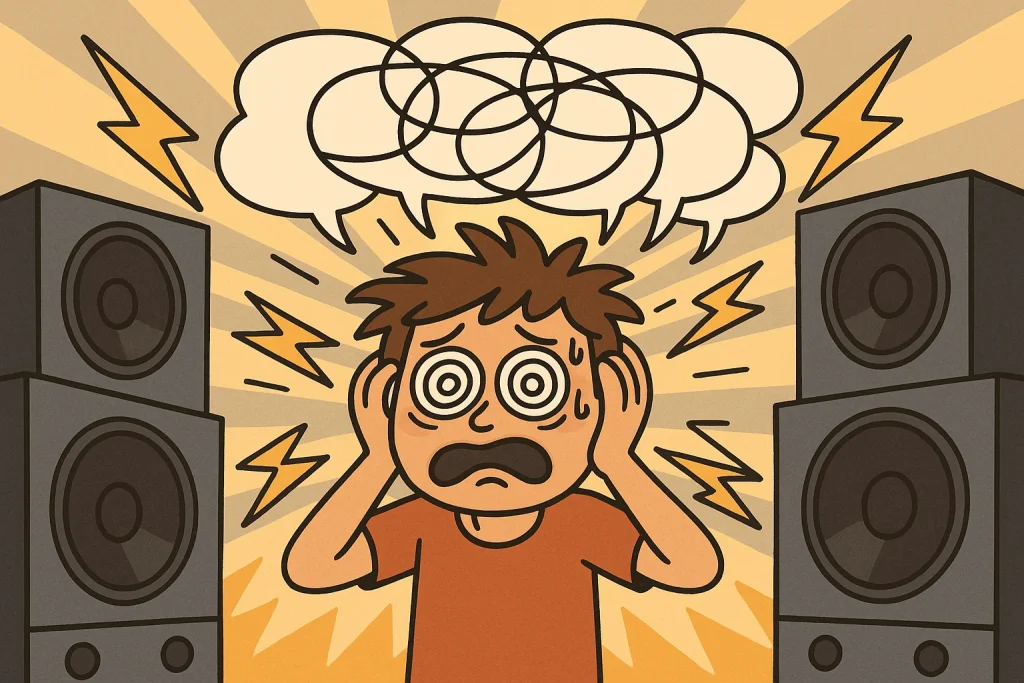
You know that feeling when you're at a party—music blasting, lights flashing, people talking over each other—and you suddenly can’t think straight? Like your brain just shuts the door and goes, “Nope, I’m out”? That’s sensory overload. And if you have ADHD, it probably hits you faster and harder than most people realize.
It’s not just about being sensitive. It’s about the way our brains process stimulation. ADHD brains struggle to filter noise—literal noise, emotional noise, background noise, all of it. So when there’s too much going on at once, we short-circuit. Not because we’re weak or dramatic—but because our brains weren’t built for this kind of input flood.
Why ADHD and Sensory Overload Go Hand-in-Hand
Sensory processing issues aren’t technically part of the ADHD diagnostic criteria, but man... they feel like they should be. Because overstimulation is real. Our brains are constantly scanning for information, constantly distracted, constantly trying to focus and refocus. Add a bunch of competing sensory inputs, and boom—meltdown, freeze-up, or shutdown.
And sometimes, this sensory flood is what leads to burnout with ADHD. Because when you're constantly overwhelmed, you're constantly using energy just to stay afloat. No wonder we’re exhausted by things other people find normal.
What Sensory Overload Feels Like (For Me, Anyway)
Personally, I start feeling like I’m floating out of my body. I can hear people talking, but it’s like their words bounce off my brain. I get irritable. Or frozen. Or just incredibly tired all of a sudden. I’ve even gotten snappy with people I care about, not because I was mad—but because I was fried.
I found this article on how to manage sensory overload with ADHD and it helped me realize I wasn’t just being “too sensitive.” There are actual strategies that work—once you learn to recognize what’s happening.
How to Handle Sensory Overload (Without Losing It)
Okay, so what do you do when your senses are screaming and your brain is ready to hit the eject button? Here’s what’s helped me:
- Know your triggers: Crowds, fluorescent lights, certain fabrics, background noise—everyone’s triggers are different. Learn yours.
- Have an exit plan: I always scope out a quiet spot ahead of time if I’m going somewhere loud. Just knowing I have an escape makes a huge difference.
- Use sound and light control: Noise-canceling headphones. Sunglasses indoors. A hoodie to block light. Zero shame. Do what works.
- Ground yourself: I like tactile stuff—rubbing a smooth rock, chewing gum, holding something cool. Something that brings me back into my body.
- Tell someone: It’s okay to say, “Hey, I’m feeling a little overloaded, I’m gonna step out for a sec.” You don’t need to justify it beyond that.
You’re Not Overreacting—Your Brain Just Works Differently
Living with ADHD means navigating a world that often feels like it’s turned up to max volume. And that’s not a failure on your part—it’s just the truth of how your brain processes stimulation. The good news is, once you understand it, you can actually manage it. You can learn to protect your peace, set boundaries, and build habits that keep you grounded.
You don’t have to feel guilty for needing quiet. Or space. Or a pause. You’re not broken for needing different conditions than other people. You’re just built differently—and that’s okay.