
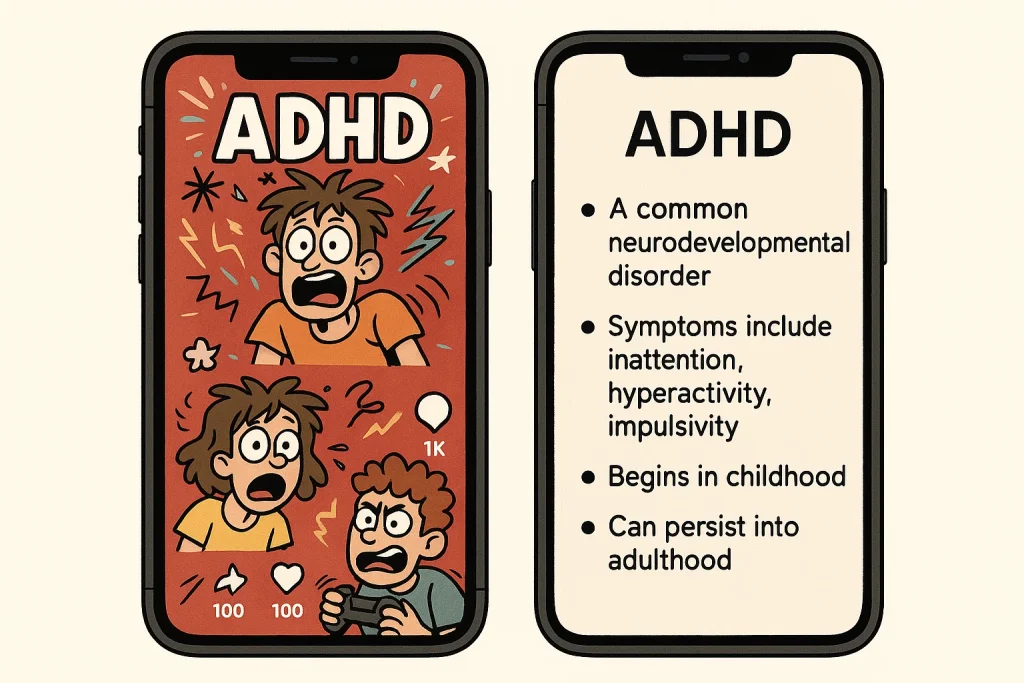
ADHD Misinfo on TikTok: What’s True—and What’s Not
Quick Answer: TikTok can be a great place to learn about ADHD, but it’s also a breeding ground for misinformation. To separate facts from myths, look for content backed by clinical sources or lived experience—and always double-check flashy claims before trusting them.
Key Facts
- ADHD affects around 4.4% of adults (CDC, 2023).
- Many ADHD TikTok videos conflate everyday behaviors with clinical symptoms (UBC, 2025).
- Romanticized or simplified portrayals can minimize the seriousness of ADHD (UBC, 2025).
- Misleading content increases confidence in self-diagnosis, but lowers accuracy (UBC, 2025).
- Some ADHD videos lead viewers to believe the disorder is 10x more common than it is (UBC, 2025).
- Claims like “ADHD meds are addictive” are often myths, not medical consensus (Mayo Clinic, 2024).
Let’s Talk About ADHD Misinfo on TikTok
I love TikTok. It’s funny, fast, and way too good at knowing what I want to see. But when I started seeing ADHD videos that basically described everyone I know as neurodivergent, I realized something was off. ADHD isn’t a vibe. It’s a real neurodevelopmental condition that affects people’s lives in deep, not-so-quirky ways.
1. ADHD Isn’t Just a “Cute Quirk”
One of the most common ADHD myths on TikTok is that it’s just being forgetful or loving chaos. You’ll see creators turning missed deadlines or messy desks into punchlines, and while humor can be helpful, it can also blur the line between a relatable moment and an actual symptom.
Romanticizing ADHD can make it seem trendy, but the reality includes executive dysfunction, emotional regulation struggles, and serious impacts on daily life. This isn’t about gatekeeping—it’s about not downplaying the experience of people genuinely managing this condition.
2. Everyday Behaviors ≠ ADHD Symptoms
We all forget things. We all scroll for hours. But these things alone don’t mean you have ADHD. Clinical ADHD involves a persistent pattern of inattention or hyperactivity that interferes with functioning. If you’re unsure, talk to a professional. And no, TikTok therapists don’t count.
3. Myths About Overdiagnosis and Medication
There’s this whole narrative that ADHD is overdiagnosed or that it’s just laziness rebranded. Nope. ADHD has been historically underdiagnosed, especially in women and people of color. And ADHD meds? When prescribed and monitored properly, they’re safe and effective for many people. Saying otherwise without nuance just fuels stigma.
4. Misinformation Feeds Confidence—Not Accuracy
Here’s the paradox: watching more ADHD videos doesn’t necessarily make you more informed. It can actually make you more confident in an inaccurate self-diagnosis. According to UBC’s article on ADHD TikTok misinformation, the illusion of understanding makes people feel more certain—even if their understanding is flawed. That’s a recipe for confusion and frustration.
5. TikTok Makes ADHD Look Way More Common Than It Is
Because the algorithm feeds you more of what you engage with, it can feel like everyone and their cat has ADHD. But ADHD isn’t as widespread as TikTok suggests. If you’re seeing ADHD content constantly, it doesn’t mean it’s more common—it means the app noticed you paused to watch.
So, How Do You Know What’s Legit?
- 🔍 Does the creator cite medical sources or lived experience?
- 📚 Are they clear that ADHD is complex, not quirky?
- ⚖️ Do they distinguish between occasional behaviors and clinical patterns?
- 🧠 Do they encourage professional diagnosis instead of self-labeling?
- 🔗 Do they link to credible resources for learning more?
And if you’re ever unsure, you can explore real-life examples of ADHD challenges, like ADHD and avoiding conflict, to get a grounded perspective that goes beyond surface-level trends.
FAQs
Q: Why is there so much ADHD misinformation on TikTok?
A: TikTok’s algorithm rewards engagement, not accuracy. Content that’s simplified, dramatic, or “relatable” gets more views—whether it’s correct or not.
Q: Should I trust ADHD self-diagnosis videos?
A: They can be helpful starting points, but they shouldn’t replace medical advice. Use them as prompts for reflection—not a final diagnosis.
Q: What’s the harm in romanticizing ADHD?
A: It can trivialize the real struggles people with ADHD face and discourage those who need help from taking it seriously enough to seek treatment.
Final Thoughts: Be Curious, Not Convinced
ADHD TikTok can feel like a mirror—but sometimes it’s a funhouse one. It reflects parts of you, but with distortions. If you see yourself in those videos, stay curious, ask questions, and dig deeper. ADHD is real, nuanced, and worth understanding in its full complexity.