
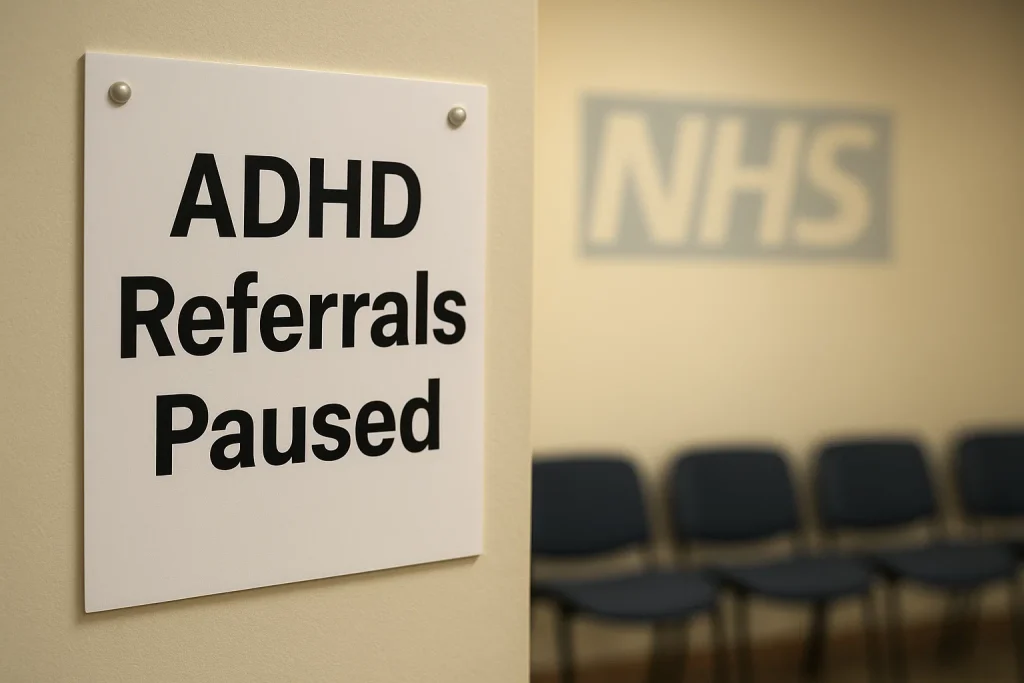
Why the UK Just Paused Adult ADHD Referrals — And What It Means for the Rest of Us
Quick Answer: In parts of the UK, NHS boards have temporarily suspended adult ADHD referrals due to rising demand and limited resources. This move has sparked concern among advocates and could signal similar risks in other overloaded healthcare systems, where rising awareness isn’t always matched by access to care.
Key Facts
- Some NHS boards in the UK have paused adult ADHD referrals for people over 25 (PrivateADHD, 2025).
- The suspension is due to a dramatic rise in ADHD referrals over the past few years (PrivateADHD, 2025).
- This decision has led to legal challenges from mental health organizations and charities (PrivateADHD, 2025).
- ADHD diagnosis rates have increased worldwide, especially among adults (CDC, 2023).
- Wait times for ADHD assessments in public systems can already stretch beyond a year (NHS, 2024).
- Access to ADHD care is deeply tied to systemic resources, awareness, and stigma (WHO, 2023).
The UK Paused ADHD Referrals — Yes, That’s Real
I stumbled across this story last week and honestly—it stopped me in my tracks. In certain parts of the UK, adults over 25 are currently being turned away from ADHD referrals. Just flat-out paused. It’s not permanent (hopefully), but it’s jarring to see healthcare systems reaching this kind of breaking point.
For those of us who’ve had to wait months—or years—for an ADHD assessment, this feels uncomfortably familiar. And even if you’re not in the UK, this news hits on a bigger issue: what happens when awareness grows faster than access?
Why Did the NHS Pause ADHD Referrals?
According to PrivateADHD’s coverage, the decision came after a massive spike in demand. NHS boards in some areas said they simply didn’t have the capacity to handle the volume of adult ADHD referrals coming in. Instead of expanding services, they hit pause—for anyone over 25.
This kind of pause isn’t just bureaucratic. It means real people are being told, “Not now. Maybe later.” And for many, that “later” is already long overdue.
This Isn’t Just a UK Problem
It’s easy to scroll past a headline like this if you live outside the UK, but here’s the thing—it could happen anywhere. ADHD awareness has exploded, especially on social media. But infrastructure hasn’t caught up. Diagnosis takes time. Trained professionals are limited. And the systems that are supposed to help? They're struggling to scale fast enough.
Honestly, it’s kind of like giving out maps to a city where half the bridges are closed. People are finally realizing what’s been going on in their brains for decades—and then being told, “Sorry, we’re full.”
Why ADHD Still Gets Pushed to the Back of the Line
ADHD isn’t loud in the way ER visits are. It’s invisible, misunderstood, and easy to downplay. People with ADHD are often brushed off as flaky, dramatic, or just bad at adulting. So when systems face pressure, ADHD care is one of the first to get cut or delayed. Not because it’s not serious, but because people don’t always see it as urgent.
But untreated ADHD leads to job loss, burnout, broken relationships, and mental health spirals. It *is* urgent. It just hides it well.
What This Means If You’re Outside the UK
This isn’t about panicking—it’s about paying attention. If your healthcare system is under strain, ADHD care might already be at risk. This is a reminder to advocate, get informed, and support organizations pushing for better infrastructure.
And it’s also a reminder that while diagnosis is powerful, it’s not the only way to start healing. If you’re stuck in a waitlist or unsure where to start, there are still ways to help yourself feel more grounded. You can explore strategies to treat ADHD without medication, especially through structure, movement, or habit shifts.
FAQs
Q: Why did the NHS pause ADHD referrals for adults?
A: Due to an overwhelming rise in demand and lack of resources, some NHS boards decided to temporarily stop new adult referrals for ADHD—specifically for those over 25.
Q: Could this happen in other countries too?
A: Yes. Many healthcare systems are under strain. When mental health demand rises faster than funding or staffing, conditions like ADHD often get deprioritized.
Q: What can I do if I’m stuck on a long ADHD waitlist?
A: While waiting, you can try evidence-based lifestyle shifts—like building routines, adding physical activity, or seeking ADHD-informed coaching or therapy. See our post on treat ADHD without medication for more ideas.
Final Thoughts: Awareness Isn’t Enough Without Access
This whole situation is a bit of a wake-up call. We’re finally talking about ADHD more than ever—but what good is awareness if people still can’t get help? If you’re frustrated, you’re not alone. We need systems that don’t just know ADHD exists—we need systems that are ready to actually support it. And if that support feels far away right now, just know: you’re still allowed to take care of yourself in the ways you can, right here, right now.