
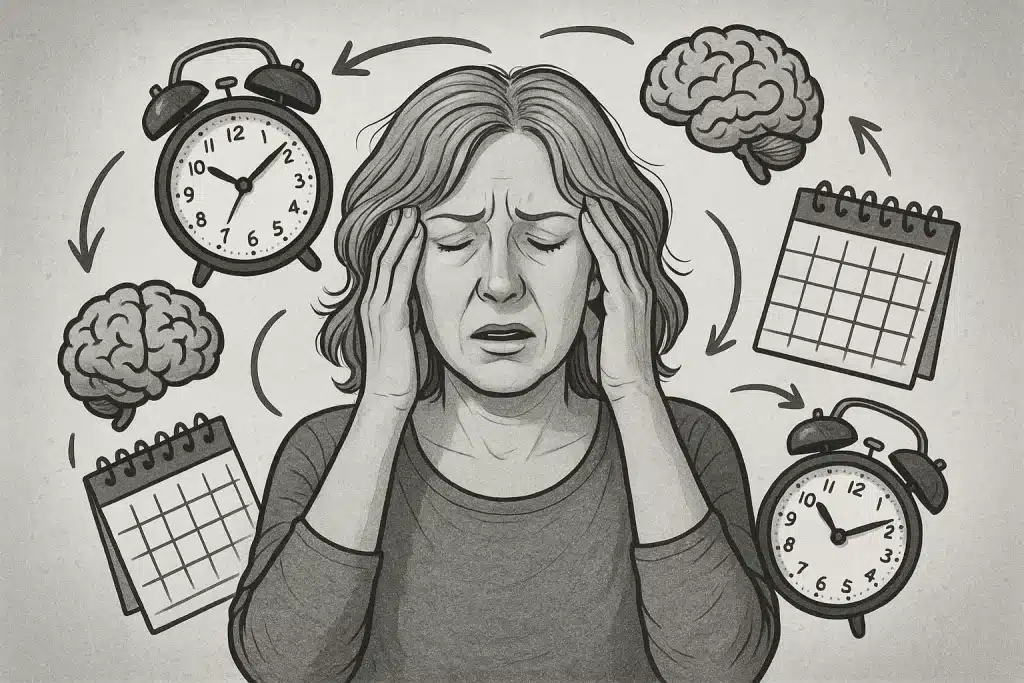
ADHD and Menopause: The Hormonal Chaos No One Warned You About
Quick Answer: Hormonal shifts during perimenopause and menopause can significantly worsen ADHD symptoms. Estrogen helps regulate dopamine, so when levels drop, ADHD traits like forgetfulness, brain fog, and mood swings can spike. The good news? Understanding the link opens the door to support strategies that actually help.
Key Facts
- Estrogen impacts dopamine, a key neurotransmitter involved in ADHD (WebMD, 2024).
- ADHD symptoms often intensify during perimenopause and menopause (WebMD, 2024).
- Women are underdiagnosed with ADHD, especially in midlife (CHADD, 2023).
- Hormonal fluctuations can worsen emotional regulation and executive function (NIH, 2023).
- Insomnia, anxiety, and brain fog are common overlaps between ADHD and menopause (CDC, 2023).
- Many women report not feeling “like themselves” during this stage—and ADHD can be a missing piece of the puzzle (WebMD, 2024).
When ADHD Meets Menopause: Why It Feels Like Everything’s Falling Apart
If you’ve been managing your ADHD just fine for years—then suddenly everything feels messier, louder, foggier—you’re not imagining it. I’ve heard from so many women in their 40s and 50s who feel like their ADHD “got worse overnight.” But what’s really happening is hormonal: as estrogen drops, so does dopamine regulation. And for an ADHD brain, that’s like someone just yanked out the last few floor tiles.
And yet… no one talks about this. Most doctors don’t screen for ADHD in menopausal women. Most ADHD research focuses on kids and men. So, here we are—foggy, flustered, and figuring it out together.
How Perimenopause and Menopause Impact ADHD
During perimenopause, estrogen levels fluctuate wildly. In menopause, they fall sharply. Since estrogen helps modulate dopamine and norepinephrine—the two brain chemicals tied to focus, mood, and motivation—its decline can lead to a spike in classic ADHD symptoms like:
- Forgetfulness (Where are my keys… again?)
- Difficulty concentrating
- Sleep issues and restlessness
- Emotional sensitivity or sudden mood swings
It’s not “just hormones” and it’s not “just ADHD.” It’s both, colliding in the most inconvenient way possible.
What You Can Do to Support Your Brain During This Transition
This phase of life is rough enough without feeling like your brain betrayed you. Here are some practical things that might help rebalance the chaos:
- 💊 Talk to your doctor about ADHD meds or HRT (hormone replacement therapy)—they might need tweaking.
- 🧘♀️ Try mindfulness or guided relaxation to help with overstimulation.
- 📓 Use a notebook or planner obsessively. Seriously, write everything down.
- 🌛 Create a calming sleep routine (or check out Restlessness at Night with ADHD for more).
- 🫂 Don’t go through it alone—find an ADHD-friendly therapist or support group.
Most importantly, be kind to yourself. Your brain is working overtime. It deserves a little grace.
It’s Not Just You—And It’s Not “All in Your Head”
What really gets me is how many women get told they’re just “emotional” or “going through a phase” when this happens. But there’s real science behind it. The WebMD article on ADHD and menopause dives deeper into the biology if you want more details.
And no, this doesn’t mean everything has to fall apart. It just means we need new strategies—and some damn compassion.
FAQs
Q: Can menopause make ADHD symptoms worse?
A: Yes. Estrogen drop affects dopamine, which plays a key role in attention and focus. Many women experience a noticeable worsening of ADHD symptoms during perimenopause and menopause.
Q: What are the most common ADHD symptoms during menopause?
A: Brain fog, forgetfulness, poor focus, emotional overwhelm, and sleep issues are some of the most reported symptoms during this time.
Q: Should I change my ADHD treatment plan during menopause?
A: Possibly. It’s worth revisiting with a doctor who understands both ADHD and menopause. Hormone therapy, medication adjustments, or lifestyle shifts may help.
Final Thoughts: You’re Not Broken—You’re in a Transition
This phase is real. The struggle is real. But so is the strength that got you here. ADHD doesn’t vanish in adulthood—and it doesn’t sit still during menopause either. But with the right support, you can navigate this storm without losing yourself in it. You’re not alone in the chaos.